Does Badger Sunscreen Really Sit Well Under Makeup?
Mineral sunscreen and makeup have a complicated relationship. One says “I protect you.” The other says “please do not roll off my face by noon.”
Badger sits right in the middle of that argument. The brand is loved for clean formulas, zinc oxide, and short ingredient lists. It is also known for thick textures that some people struggle to spread.
So the real question stands. Does Badger sunscreen actually work under foundation, concealer, and powder? Or does it pill, slide, and turn your face into a ghost by lunch?
In a Nutshell:
- Badger Face Mineral Sunscreen SPF 30 works best under makeup. It uses a sheer matte finish and blends far easier than the classic cream tubes. This is the formula makeup wearers should reach for.
- The Badger Sport and classic cream formulas do not play well with foundation. They are thick, greasy, and heavily white. They protect beautifully at the beach, but they fight your brush.
- White cast is real but manageable. Badger uses non nano zinc oxide, and lighter skin tones see very little. Medium and deep tones will notice a grey film unless the product is buffed thin.
- Wait time matters more than product choice. Give Badger a full five to ten minutes to set before makeup. Skipping this step causes almost every pilling complaint people post online.
- Coconut oil and beeswax appear in several formulas. These can clog pores for acne prone skin and can loosen powder foundation during hot days.
- Value is strong. You get clean ingredients, reef safe claims, and solid UVA and UVB protection at a fair price, but you trade away the silky slip of silicone based sunscreens.
What Is Badger Sunscreen?

- EASY TO APPLY & NO WHITE CAST: This mineral sunscreen face moisturizer with SPF 30 is a non-greasy, non-whitening, easy to apply, lightweight & has a sheer-matte finish that blends with all skin tones
- VEGAN SUNSCREEN & 80% ORGANIC: Clear zinc oxide, organic plant oils & Vitamin E in this spf moisturizer face sunscreen protect & nourish your skin. Seaweed extract protects from blue light
Last update on 2026-08-17 / Affiliate links / Images from Amazon Product Advertising API Some of the links on this website are affiliate links, which means that at no additional cost to you, I earn a commission if you click through and make a purchase. I only recommend products and services that I believe will add value to my readers. Thank you for your support!
Badger is a family owned company based in New Hampshire. It makes balms, oils, and mineral sunscreens using short ingredient lists and organic plant oils.
Every Badger sunscreen uses zinc oxide as the only active ingredient. There are no chemical filters like avobenzone or oxybenzone in the lineup.
The brand splits its sunscreens into a few clear groups. There are body creams, sport formulas, kids formulas, baby formulas, and face specific products.
The face range matters most for makeup users. Badger Face Mineral Sunscreen SPF 30 was built as a daily moisturizer with sun protection, not a beach product.
That formula uses clear zinc oxide, sunflower seed wax, babassu starch, and golden seaweed extract. The starch is the quiet hero here because it absorbs oil and creates grip.
The classic Badger Mineral Sunscreen Cream uses a different approach. It leans on sunflower oil, beeswax, and a heavier concentration of zinc.
Badger also claims blue light defense and forty minute water resistance on the daily face formula. The company states its products are vegan, cruelty free, and reef safe.
Understanding this split is the whole review in one paragraph. One Badger sunscreen is a makeup base. The others are outdoor armor. Buying the wrong one is why some reviews sound angry and others sound delighted.
The Unboxing Experience
Badger keeps packaging simple and slightly old fashioned, in a charming way.
The face sunscreen arrives in a soft squeeze tube made from fifty percent recycled plastic. The cap clicks shut with a satisfying snap and survived my gym bag without leaking.
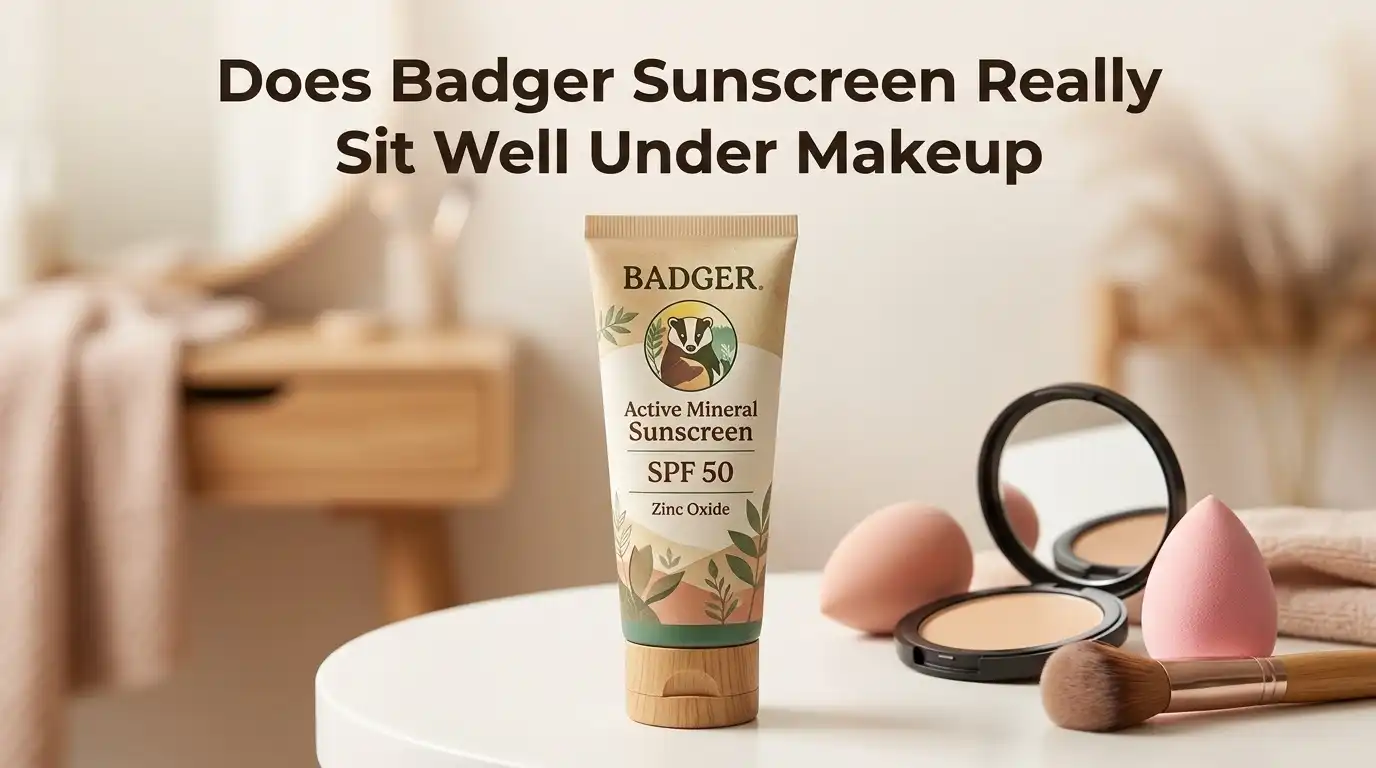
The label is busy but honest. Ingredients sit right on the front, and the badger mascot gives the whole thing a friendly camping store vibe.
Squeezing the tube for the first time tells you a lot. The face formula comes out as a soft white lotion, thinner than expected, closer to a light moisturizer.
The classic cream tube behaves differently. That product emerges as a dense white paste that holds its shape on your fingertip like frosting.
Scent is a pleasant surprise on both. The unscented versions smell faintly of coconut and sunflower oil, with no chemical sharpness at all.
There is no fancy pump, no airless bottle, no dropper. You get a tube, and you get product.
Some people will find the packaging basic. I found it refreshingly honest, because the money clearly went into the formula instead of the box.
One small annoyance appeared right away. The tube opening is narrow, so cold weather makes the thicker creams genuinely hard to squeeze out.
Warm the tube in your hands for twenty seconds first. This tiny habit fixes half the application complaints.
Does Badger Sunscreen Work Under Makeup? The Short Answer
Yes, but only the face formula, and only with the right technique.
Badger Face Mineral Sunscreen SPF 30 wears well under liquid foundation, cream blush, and setting powder. It dries down to a soft matte finish that grips makeup instead of repelling it.
My foundation stayed in place for roughly six hours on normal skin. That is a solid result for any mineral sunscreen.
The classic Badger cream and sport formulas failed the makeup test. Foundation slid, separated, and lifted into small balls within an hour.
The reason is simple chemistry. Oil heavy, wax heavy sunscreens stay tacky on the surface and never fully set. Makeup needs a stable base to hold onto.
Skin type changes the outcome too. Dry skin loves the face formula because the plant oils add comfort under matte foundation.
Very oily skin will still need a primer or powder on top. Badger does not control shine the way a silicone based sunscreen does.
Application amount also decides success. A full quarter teaspoon for the face is the recommended dose, and that much Badger sits heavier than the same dose of a Korean chemical sunscreen.
Many users cheat and apply less. That improves makeup wear but lowers your actual sun protection, which defeats the point entirely.
So the honest verdict is conditional. Badger works under makeup when you choose the face version, apply properly, and wait before layering.
Badger Face Mineral Sunscreen SPF 30 Under Makeup

- EASY TO APPLY & NO WHITE CAST: This mineral sunscreen face moisturizer with SPF 30 is a non-greasy, non-whitening, easy to apply, lightweight & has a sheer-matte finish that blends with all skin tones
- VEGAN SUNSCREEN & 80% ORGANIC: Clear zinc oxide, organic plant oils & Vitamin E in this spf moisturizer face sunscreen protect & nourish your skin. Seaweed extract protects from blue light
Last update on 2026-08-17 / Affiliate links / Images from Amazon Product Advertising API Some of the links on this website are affiliate links, which means that at no additional cost to you, I earn a commission if you click through and make a purchase. I only recommend products and services that I believe will add value to my readers. Thank you for your support!
This is the formula worth your attention. Badger designed it for daily wear, and that intention shows immediately.
The lotion spreads with light pressure and disappears faster than any other Badger product I tested. Full absorption took about ninety seconds on my cheeks.
The finish is the important part. It sets to a sheer matte, slightly powdery surface, thanks to the babassu starch in the formula.
That powdery grip is what foundation needs. My brush glided instead of dragging, and the color stayed even across my forehead.
Cream blush performed beautifully on top. The sunscreen did not lift or streak when I blended with fingers.
Powder products behaved well too. Setting powder did not cling to dry patches or turn cakey around my nose.
Concealer under the eyes was the weakest area. The sunscreen creates slight movement there, so concealer creased about an hour earlier than usual.
Wear time held up through a warm afternoon. By hour seven my T zone looked shiny, though the makeup itself stayed intact.
Reapplication over makeup remains awkward. This is a lotion, not a stick or powder, so touching up means disturbing your face.
Keep a mineral powder SPF in your bag for that job. Use Badger as your morning base layer and let something else handle midday.
For daily office wear, school runs, and normal city sun, this formula genuinely works. It is one of the few clean mineral options that respects makeup.
Ingredients That Affect Makeup Wear
Ingredient lists predict makeup behavior better than marketing claims do.
Badger uses non nano zinc oxide across the entire range. Zinc creates a physical layer on the skin, and that layer has texture.
The face formula pairs zinc with sunflower seed wax, babassu starch, castor wax, and fractionated coconut oil. Starch and wax combine into a dry touch surface.
The classic cream takes a different route. It uses sunflower oil, beeswax, and vitamin E in higher amounts.
Beeswax is the troublemaker for makeup. It stays soft and slightly sticky at skin temperature, so foundation never locks down.
Coconut oil creates a second issue. Some acne prone users report clogged pores and small bumps after a week of daily use.
Reddit reviews mention this repeatedly. One common story involves the daily face formula causing breakouts while the baby formula worked fine.
Silicones are completely absent from Badger products. That is great for clean beauty fans and awkward for makeup fans.
Silicones are the reason drugstore primers feel like velvet. Without them, you lose that blurring slip that helps foundation glide.
Golden seaweed extract and vitamin E add antioxidant support. These are nice extras but have no effect on makeup grip.
Read the list before buying. If you see beeswax high on the label, that tube belongs at the beach, not under your foundation.
White Cast Test on Different Skin Tones
Let us be direct about this. Zinc oxide is white, so every mineral sunscreen leaves some cast.
Badger states that its clear zinc oxide minimizes whitening. The company does not promise zero cast, which I appreciate.
On fair skin the face formula was almost invisible. A faint brightening appeared, similar to a light primer.
On light medium skin the cast showed for about two minutes and then faded. Warming the product between fingers helped it settle.
On medium and tan skin a grey undertone remained visible in bright bathroom lighting. Foundation covered it completely.
On deep skin tones the cast is a genuine problem. The daily formula leaves an ashy film that foundation must work to correct.
The classic Badger Sport formula is far worse. Reviewers describe it as a strong white mask, and the photos online are not exaggerating.
Flash photography reveals more than daylight does. Zinc reflects light, so expect a bright face in nightclub or party photos.
Three tricks reduce the problem noticeably. Apply in thin layers, wait between them, and use a warm toned foundation on top.
Tinted mineral sunscreens solve this better. If white cast is your main concern, a tinted alternative from another brand will serve you better than any Badger option.
How to Apply Badger Sunscreen Under Foundation
Technique changes everything with mineral sunscreen. Follow this order and most problems disappear.
Start with clean, dry skin. Wet skin dilutes zinc and creates streaks immediately.
Apply your moisturizer first if you use one. Let it absorb for two full minutes before moving on.
Warm the Badger tube between your palms. Cold product drags and sits in patches.
Dispense a quarter teaspoon. Yes, that looks like a lot, and yes, you need it for real protection.
Dot the product across five areas. Forehead, both cheeks, nose, and chin work well.
Blend with fingertips using gentle pressing motions. Do not rub aggressively, because friction causes the wax to ball up.
Now the most important step. Wait five to ten minutes before touching your face again.
Badger needs this time to set into that matte finish. Rushing this step is the single biggest cause of pilling complaints.
Apply foundation with a damp sponge rather than a brush. Bouncing motions disturb the sunscreen far less than sweeping ones.
Skip primer entirely. The starch in the face formula already does that job, and stacking layers invites separation.
Set with a light dusting of powder. This locks the whole system down for the day.
Follow this routine and Badger behaves. Skip it and you will write an angry review like many people have.
Pilling, Sliding, and Other Problems
Honest reviews cover the failures. Here are the ones I hit.
Pilling happened three times during testing. Every instance followed a rushed morning where I applied foundation within two minutes.
The pills look like tiny grey rolls. They gather around the nose and along the jaw first.
Sliding is a warm weather issue. Above eighty degrees, the plant oils soften and foundation begins migrating.
Mask wearing made this worse. Friction lifted both sunscreen and makeup off my chin within an hour.
Eye area movement is consistent. Concealer creases faster over Badger than over silicone based sunscreens.
Powder foundation struggles most. The slight tackiness grabs powder unevenly and creates patchy coverage.
Reapplication over makeup is genuinely impractical. There is no stick or spray version of the face formula.
Some users also report stinging near the eyes. This is uncommon but appears in a handful of reviews.
The sport and body formulas fail under makeup completely. Do not attempt it. They are excellent products used correctly and terrible products used wrongly.
None of these issues are dealbreakers for the face formula. They are limitations you plan around, the same way you plan around any mineral sunscreen.
Best Makeup Formulas to Pair With Badger
Product pairing decides your results more than most people realize.
Liquid foundations with a satin finish work best. They contain enough emollient to blend without disturbing the zinc layer.
Serum foundations and skin tints are the ideal match. Their thin texture sits on top of Badger without dragging.
Cream blush and cream bronzer performed well throughout testing. Press them on with fingers rather than swiping.
Loose setting powder is your friend. A thin dusting kills shine and stops midday migration.
Full coverage matte foundations are risky. They contain heavy pigment and often need buffing, and buffing causes pilling.
Powder foundation is the weakest partner. Save it for chemical sunscreen days.
Stick foundations create drag problems. The pressure required to apply them lifts the sunscreen underneath.
Setting sprays help significantly. A light mist after powder locks the entire face for several extra hours.
Waterproof mascara and long wear lip products are unaffected, since they never touch the sunscreen layer.
Think of Badger as a slightly dry base. Choose makeup with a little slip and everything cooperates beautifully.
Oily Skin Versus Dry Skin Results
Skin type changes this review dramatically.
Dry skin gets the best experience. The sunflower and coconut oils add comfort, and no flaking appeared over four weeks.
Foundation looked smoother on dry days than on oily days. The sunscreen filled small texture gaps like a gentle primer.
Normal skin also performed well. Six to seven hours of clean wear is a fair expectation.
Oily skin faces a tougher time. The starch controls shine for about three hours, then your T zone wins.
Blotting papers become necessary by early afternoon. Powder touch ups work but risk cakiness.
Acne prone skin needs caution. Coconut oil and beeswax rank as pore clogging for some people.
Test on a small area for one week first. Your forehead will tell you the truth quickly.
Sensitive skin does exceptionally well. Zinc oxide is the gentlest filter available, and Badger tests its formulas for sensitivity.
Rosacea prone users often prefer mineral sunscreen for this reason. The lack of fragrance in the unscented version helps further.
Combination skin sits in the middle. Apply Badger everywhere, then powder only the center of your face.
What Badger Sunscreen Does Not Do Well
Every honest review needs this section.
Badger does not deliver a truly invisible finish on deep skin tones. That is a real limitation, not a technique problem.
Badger does not offer a convenient reapplication format for the face range. No stick, no compact powder, no mist.
Badger does not control oil for a full workday. Shine returns by hour four on oily skin.
Badger does not blur pores. Silicone based primers do that, and there are no silicones here.
Badger does not spread easily in cold weather. The tubes stiffen and require warming.
Badger does not suit everyone with acne. The plant oils are comedogenic for a portion of users.
Badger does not provide a tinted face option in the main range. Tint would solve the cast issue instantly.
Badger does not survive heavy sweat under makeup. Forty minute water resistance is decent, not exceptional.
Badger does not feel luxurious. It feels functional, clean, and slightly rustic, which is the brand identity.
Knowing these limits before buying prevents disappointment. The product is good at what it does and simply does not attempt everything.
Pros and Cons
Pros
- Zinc oxide only formula protects against UVA and UVB rays without chemical filters, which suits sensitive and reactive skin extremely well.
- The face version dries to a sheer matte finish that grips foundation better than most mineral sunscreens on the market.
- Short ingredient lists with organic plant oils appeal to clean beauty shoppers who read every label carefully.
- Reef safe, vegan, and cruelty free credentials are genuine, and the company operates on solar power with recycled packaging.
- Fragrance free options exist, which helps rosacea prone and eczema prone users avoid irritation.
- Price stays reasonable compared to premium mineral sunscreens that cost twice as much for similar zinc levels.
Cons
- White cast remains noticeable on medium and deep skin tones, especially in photographs taken with flash.
- Coconut oil and beeswax can clog pores, so acne prone users may break out after regular use.
- The sport and classic cream formulas are completely unsuitable under makeup due to thickness and tackiness.
- No tinted face option exists, which would have solved the cast problem for many customers.
- Oil control fades after roughly three hours, so oily skin needs powder backup.
- No convenient reapplication format means touching up over makeup is messy and inconvenient.
Who Should Buy It and Who Should Skip It
Buy Badger Face Mineral Sunscreen if you have sensitive, dry, or normal skin and wear light to medium makeup.
Buy it if clean ingredients matter to you more than a silicone smooth feel. This is one of the most transparent formulas available.
Buy it if you have fair to light medium skin and want mineral protection without obvious ghosting.
Buy it if you work indoors and need reliable daily protection rather than beach grade coverage.
Skip it if you have a deep skin tone and no plan to cover the cast with foundation.
Skip it if you have very oily or acne prone skin. A lightweight gel sunscreen will serve you better.
Skip it if you need to reapply over makeup during the day. The format simply does not support that.
Skip the sport and classic cream versions entirely for makeup purposes. Buy them for hiking, swimming, and long outdoor days instead.
Consider a tinted mineral alternative if white cast is your primary worry. Several brands solve that specific problem more effectively.
Final Verdict
Badger sunscreen does work under makeup, with one clear condition attached.
You must choose the Face Mineral Sunscreen SPF 30. That formula was built for daily wear and it behaves like a proper makeup base.
Give it ten minutes to set. Apply foundation with a damp sponge. Finish with a light powder.
Follow that routine and you get comfortable wear, honest sun protection, and a clean ingredient list you can actually pronounce.
The compromises are real. Cast on deeper tones, limited oil control, and no easy reapplication are genuine drawbacks.
For sensitive skin wearers who want mineral protection without silicones, Badger earns its place. It is not the smoothest sunscreen available, but it may be the most honest one.
Rating for makeup compatibility sits at a fair four out of five for the face formula. The body and sport versions score one out of five for the same purpose.
Pick correctly and you will be happy. Pick wrongly and you will join the chorus of confused reviewers online.
Frequently Asked Questions
Can I put makeup directly over Badger sunscreen?
Yes, but wait five to ten minutes first. The face formula needs that time to set into its matte finish, and rushing causes pilling.
Does Badger sunscreen cause pilling under foundation?
It can. Pilling usually happens when you apply makeup too quickly or rub too hard. Pressing motions with a damp sponge prevent most of it.
Which Badger sunscreen is best for the face?
Badger Face Mineral Sunscreen SPF 30 is the correct choice. It uses clear zinc oxide and babassu starch for a lightweight, sheer matte result.
Does Badger sunscreen leave a white cast?
Yes, some cast appears. Fair skin sees very little, while medium and deep tones will notice a grey film that foundation usually covers.
Is Badger sunscreen safe for acne prone skin?
It depends on your triggers. Coconut oil and beeswax appear in several formulas and can clog pores, so patch test for a week before daily use.
Can I use Badger sunscreen as a makeup primer?
The face version acts like a light primer thanks to its starch content. You should not layer a separate primer on top, since that often causes separation.
How do I reapply Badger sunscreen over makeup?
There is no easy way with the lotion format. Most people use a mineral SPF powder for midday touch ups and keep Badger as the morning layer.
Does Badger sunscreen work for oily skin under makeup?
Partly. Shine control lasts around three hours, so oily skin needs setting powder and blotting papers to get through a full day.

Hi, I’m Rosalie Celeste, your trusted product reviewer and the voice behind Purely Rated. I’m passionate about helping everyday shoppers make informed decisions by sharing my honest, first-person experiences with Amazon products across fashion, beauty, supplements, and lifestyle categories. With a keen eye for quality and value, I test and review products that I genuinely use in my daily life, so you know you’re getting authentic insights.