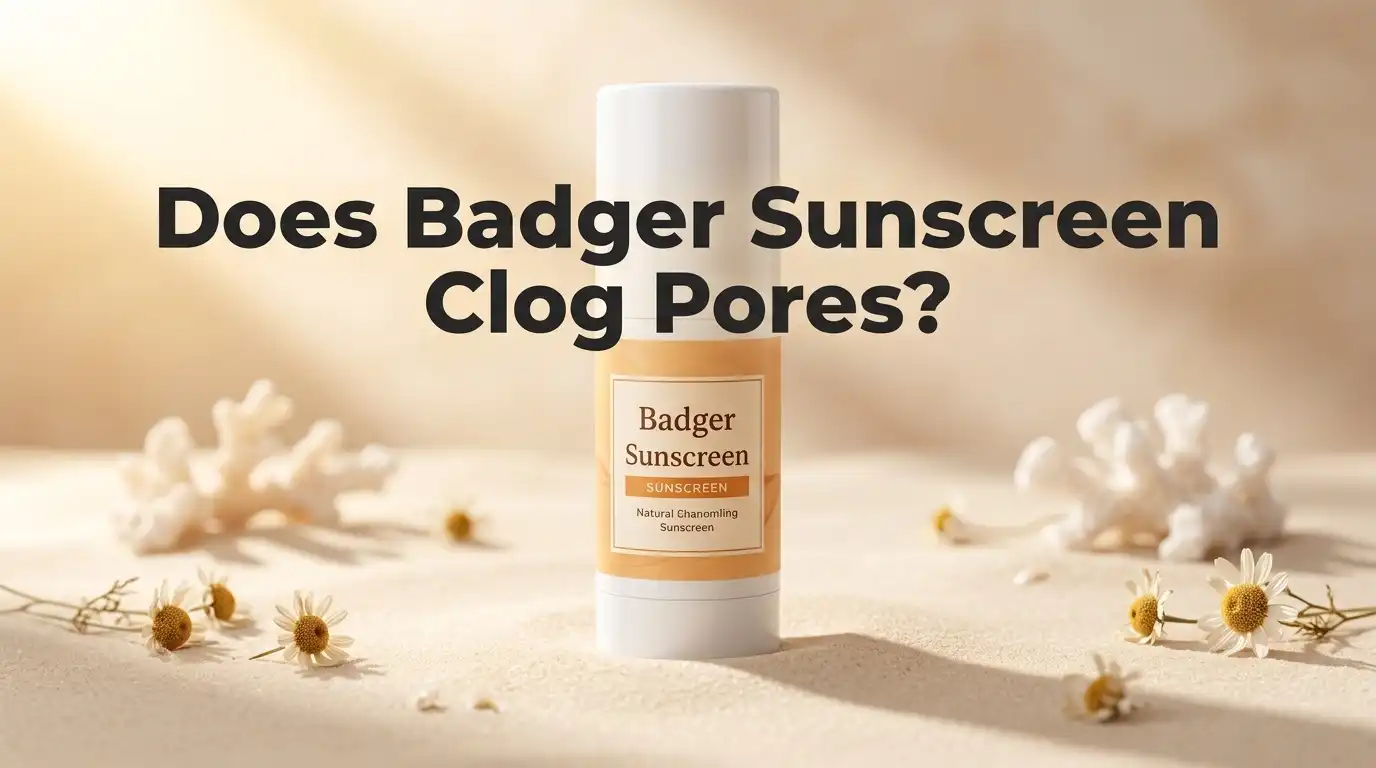
Does Badger Sunscreen Clog Pores?
You squeeze out a thick white blob. You rub it in. Then a small voice in your head asks the scary question: is this stuff going to give me a face full of bumps tomorrow?
That worry is fair. Badger sunscreen is famous for being thick, oily, and unapologetically natural. It looks like something that would sit in your pores like wet paint.
But looks lie. This post digs into what Badger sunscreen actually contains, what the brand tests for, and what real users report after weeks of daily wear. You will get the honest answer, not the marketing answer.
In A Nutshell:
- Badger tests several of its sunscreens as non comedogenic. That means those formulas were evaluated and did not block pores in testing. The brand states this directly on its product pages and FAQ.
- Zinc oxide itself does not clog pores. Zinc oxide sits on the skin surface and reflects light. Dermatologists often call it one of the calmest filters for reactive skin.
- The oils are the real question mark. Badger uses sunflower seed oil, beeswax, and jojoba oil. Sunflower oil rates low on comedogenic scales, but beeswax sits higher for some people.
- Poor removal causes more breakouts than the formula does. Badger clings hard. If you rinse with plain water, residue stays behind and traps sweat and dead skin.
- Oily and acne prone users report mixed results. Some wear it daily with clear skin. Others feel congested after a week. Skin type decides the outcome more than the product does.
- This is a body and outdoor sunscreen first. If you want a light daily face SPF with a matte finish, a different product will make you happier.
What Badger Sunscreen Actually Is
Badger is a small family owned company based in New Hampshire. It makes balms, body care, and mineral sunscreens using short ingredient lists.
Every Badger sunscreen uses non nano uncoated zinc oxide as the only active filter. There are no chemical UV absorbers like avobenzone or oxybenzone in the lineup.
The rest of the formula is usually food grade material. Think sunflower seed oil, beeswax, jojoba, vitamin E, and sometimes shea butter or cocoa butter.
Most versions carry a 98 percent organic claim. Many are certified by outside groups and rated well by the Environmental Working Group.
The zinc percentage typically lands between 18 and 22 percent depending on the SPF level. That is a high load of mineral, which explains the thick texture.
Badger sells several formats. There is a Sport line, a Kids line, a Daily lotion, a Face Stick, and Baby options. Each one behaves differently on skin, so lumping them together is a mistake.
The Daily Mineral lotion is the sheerest of the group. The Sport and Reef Safe creams are the heaviest.
Understanding this range matters for the pore question. A thick balm style cream and a light daily lotion do not carry the same congestion risk.
Badger also avoids nano particles. That choice keeps the zinc from sinking into skin, but it also makes the product sit visibly on the surface.
Does Badger Sunscreen Clog Pores? The Short Answer
No, Badger sunscreen is not designed to clog pores, and several formulas are tested as non comedogenic. The company states this on its official FAQ and on individual product listings.
Non comedogenic testing means a lab applied the product under controlled conditions and checked for comedone formation. The tested Badger formulas passed.
That is the official position. Now for the nuance.
Non comedogenic is not a legal term. No government agency polices it. Brands run their own tests using their own panels.
A product can pass a lab test and still congest your specific face. Skin is personal. Sebum output, climate, and your other products all change the result.
Badger sunscreen is also occlusive. It forms a real physical film. That film keeps water in and keeps UV out.
For dry skin, occlusion feels wonderful. For oily skin in humid heat, occlusion can trap sweat and sebum under a layer of wax.
Trapped sebum is not the same thing as a clogged pore, but it can lead to one if you leave the product on too long.

- MAXIMUM PERFORMANCE MINERAL SUNSCREEN: Broad Spectrum SPF 50 protection using non-nano uncoated Zinc Oxide to shield against UVA & UVB rays, clinically tested safe for sensitive skin, suitable sunblock for face, body, and heavy outdoor activity
- CLEAN & 98% ORGANIC INGREDIENTS: Formulated with just 4 simple ingredients: mineral zinc oxide, organic sunflower oil, organic beeswax, & sunflower vitamin E, making it NSF Certified Organic, non-GMO, gluten-free, and chemical-free
Last update on 2026-07-23 / Affiliate links / Images from Amazon Product Advertising API Some of the links on this website are affiliate links, which means that at no additional cost to you, I earn a commission if you click through and make a purchase. I only recommend products and services that I believe will add value to my readers. Thank you for your support!
The honest verdict is this: the formula is low risk, but the wear conditions raise that risk. People who sweat heavily, reapply often, and cleanse lazily report the most trouble.
People with normal or dry skin who cleanse properly at night rarely complain about congestion at all.
Badger Reef Safe Mineral Sunscreen SPF 50 Review
This is the flagship tube and the one most shoppers pick first. It carries SPF 50 with non nano zinc oxide and an unscented base.
The label lists it as non comedogenic and hypoallergenic. It is also gluten free and reef friendly, which is why beach travellers grab it.
Texture is where opinions split. The cream is dense. It comes out of the tube like a soft paste rather than a lotion.
You need to warm it between your fingers first. Dot it on, then push it around in small circles. Rushing leaves streaks.
The white cast is real and it is strong. On light skin it fades to a soft matte veil within ten minutes. On medium and deep skin it stays visible.
Water resistance is rated at 80 minutes. In practice it holds up well during swimming, which is unusual for a natural formula.
The finish is not greasy once it sets, but it is not matte either. Expect a slightly waxy, velvety surface.
Who should buy it: beach days, hiking, kids, sensitive skin, and anyone reacting badly to chemical filters.
Who should skip it: anyone wanting an invisible daily face SPF under makeup.
One practical note. The 2.9 ounce tube empties faster than you think, because mineral sunscreen needs a generous layer to reach its rated SPF.
Top 3 Alternative for Badger Sunscreen

- CLEAR SUNSCREEN FOR FACE: This lightweight face sunscreen with transparent Zinc Oxide provides broad spectrum SPF 46 protection and helps protect normal and sensitive skin types from UVA and UVB damage without leaving white cast residue behind
- FOR NORMAL, ACNE-PRONE, AND SENSITIVE SKIN TYPES: UV Clear uses an oil-free, non-comedogenic formula that’s designed for daily use on normal, oily, rosacea, and acne-prone skin so you get effective daily sun protection without feeling greasy

Last update on 2026-09-14 / Affiliate links / Images from Amazon Product Advertising API Some of the links on this website are affiliate links, which means that at no additional cost to you, I earn a commission if you click through and make a purchase. I only recommend products and services that I believe will add value to my readers. Thank you for your support!
EltaMD UV Clear Face Sunscreen SPF 46

- POWERFUL MINERAL SUNSCREEN - Protect sensitive skin from the sun’s harmful rays with Blue Lizard Sensitive Mineral SPF 50 Sunscreen Lotion it contains no harsh chemical active ingredients that might irritate sensitive skin.
- SPF 50 BROAD SPECTRUM PROTECTION - The water-resistant formula provides broad spectrum protection and helps protect skin from up to 98% of UVB rays.
Last update on 2026-08-17 / Affiliate links / Images from Amazon Product Advertising API Some of the links on this website are affiliate links, which means that at no additional cost to you, I earn a commission if you click through and make a purchase. I only recommend products and services that I believe will add value to my readers. Thank you for your support!
Blue Lizard Sensitive Mineral SPF 50 Sunscreen Lotion

- This oil-free, 100% mineral sunscreen for face and body with zinc oxide and titanium dioxide leaves skin feeling soothed and protected.
- Body & facial sunscreen is formulated with Cell-Ox Shield technology: broad spectrum UVA/UVB protection with antioxidants.
Last update on 2026-08-17 / Affiliate links / Images from Amazon Product Advertising API Some of the links on this website are affiliate links, which means that at no additional cost to you, I earn a commission if you click through and make a purchase. I only recommend products and services that I believe will add value to my readers. Thank you for your support!
La Roche Posay Anthelios Mineral Sunscreen SPF 50 Gentle Lotion
Badger Sport Mineral Sunscreen SPF 40 Review

- HIGH PERFORMANCE SPORT SUNSCREEN: Broad Spectrum SPF 40 protection using non-nano uncoated Zinc Oxide to shield against UVA & UVB rays, clinically tested safe for sensitive skin, suitable sunblock for face, body, and heavy outdoor activity
- CLEAN & 98% ORGANIC INGREDIENTS: Formulated with just 4 simple ingredients: mineral zinc oxide, organic sunflower oil, organic beeswax, & sunflower vitamin E, making it NSF Certified Organic, non-GMO, gluten-free, and chemical-free
Last update on 2026-07-23 / Affiliate links / Images from Amazon Product Advertising API Some of the links on this website are affiliate links, which means that at no additional cost to you, I earn a commission if you click through and make a purchase. I only recommend products and services that I believe will add value to my readers. Thank you for your support!
The Sport version targets long outdoor sessions. It uses a higher wax content so it stays put during heavy sweating.
That extra wax is the trade off. This is the thickest Badger sunscreen and the hardest one to spread.
Unboxing is simple and slightly charming. The tube arrives in a small recyclable carton with tiny illustrated badgers on the front.
The tube itself feels soft and squeezable. There is no fancy pump and no plastic seal to fight with.
Peel the foil, squeeze, and you get a stiff ribbon of off white cream that smells faintly like sunflower seeds and wax.
First application takes practice. Cold product barely moves. Warm it in your palms for twenty seconds and it becomes far more cooperative.
Once set, it feels like a light film rather than a lotion. It does not slide into your eyes when you sweat, which is a genuine advantage over many mineral competitors.
For pore concerns, this is the version most likely to feel heavy on oily faces. The beeswax content is high and it clings tightly.
Use it on the body, shoulders, ears, and nose for sport days. Save a lighter product for full face daily wear.
Reapplication over an existing layer works, but the buildup gets noticeable after the third round.
Ingredient Breakdown And Comedogenic Ratings
Let us look at what is actually inside. The list is short, which makes analysis easy.
Zinc oxide is the active. Comedogenic rating zero. It is inert, sits on top of skin, and has mild antibacterial behaviour.
Sunflower seed oil is the main carrier. It rates 0 to 2 on most comedogenic scales, so it is considered safe for most faces.
Sunflower oil is high in linoleic acid. Research suggests acne prone skin often has low linoleic acid levels, which is why this oil is generally well tolerated.
Beeswax is the flag to watch. Ratings vary from 0 to 2 depending on the source and the refinement level.
Beeswax is what makes Badger cling. It is also what makes the product harder to remove.
Jojoba oil rates around 2. Its structure resembles human sebum, which usually means good tolerance.
Sunflower vitamin E is an antioxidant and stabiliser. No congestion concerns there.
Some scented versions add essential oils like tangerine, vanilla, lavender, or seabuckthorn. Essential oils do not clog pores, but they can irritate reactive skin.
Irritation and congestion look similar in the mirror. Redness and small bumps from fragrance often get blamed on clogged pores.
If you have reactive skin, always pick the unscented version. Badger sells unscented across almost every SPF level.
The overall comedogenic profile of the formula is low. The risk sits with the occlusive film, not with any single ingredient.
How Badger Sunscreen Behaves On Oily Skin
Oily skin is where the complaints cluster. Here is what actually happens through the day.
At the ten minute mark, the product sets into a soft matte film. Most people feel fine at this point.
By hour three, sebum starts pushing through. The finish turns from matte to slightly shiny, especially across the nose and forehead.
By hour six in humid weather, the layer can feel tacky. Sweat mixes with the wax and creates a slick surface.
This is when the congested feeling arrives. It is a surface issue rather than a deep pore issue, but it feels the same.
Blotting papers help enormously. Press gently rather than wiping, so you keep the zinc layer intact.
Cold weather changes the story completely. In dry autumn air, oily skin often wears Badger comfortably all day.
Users with combination skin report the best results by zoning. They use Badger on cheeks and jaw, then a lighter fluid on the T zone.
Makeup over Badger is difficult. The waxy base pills under liquid foundation and grabs powder unevenly.
If you wear makeup daily and have oily skin, Badger is probably the wrong choice for your face. Keep it for your neck, chest, arms, and outdoor weekends.
What Badger Sunscreen Does Not Do Well
Honest reviews name the flaws. Badger has several.
White cast is significant. On deeper skin tones it reads as grey or ashy and does not fully disappear.
Spreadability is poor. You will spend real effort rubbing this in, especially on dry skin or in cold conditions.
It pills under other products. Layer it over a rich moisturiser and you will get small rolls of product.
It does not play well with makeup. Foundation slides, powder clings in patches, and touchups look uneven.
Separation happens. Because the formula avoids synthetic stabilisers, oil can pool at the top of the tube if stored in heat.
Give the tube a squeeze and a knead before use if this occurs. It is cosmetic, not dangerous, but it is annoying.
The tube size is small for the coverage needed. A proper full body application uses roughly a shot glass of product, so a 2.9 ounce tube may last only a few beach days.
Scented versions can sting. Citrus essential oils near the eyes are uncomfortable for some users.
Removal is a chore. Water alone will not lift it. This is the single biggest cause of Badger related breakouts.
None of these flaws are dealbreakers for outdoor use. They are dealbreakers for effortless daily face wear.
Pros And Cons Of Badger Sunscreen
Pros
- Non comedogenic testing on several formulas, so pore blocking risk is officially assessed and low.
- Only zinc oxide as the active filter, which suits sensitive, rosacea prone, and post procedure skin.
- Very short ingredient list with recognisable plant oils and no synthetic fragrance in the unscented range.
- Excellent water resistance at 80 minutes, which beats many other natural sunscreens.
- Reef friendly and biodegradable, an important factor in Hawaii, Key West, and other regulated destinations.
- Certified organic content and strong third party safety ratings give real peace of mind.
- Kid and baby versions use the same gentle base, so one brand covers the whole family.
Cons
- Heavy white cast that never fully clears on medium and deep skin tones.
- Thick texture that demands warming and patient rubbing before it blends.
- Waxy finish that can feel occlusive on oily skin in hot weather.
- Difficult removal that requires an oil cleanser or a proper double cleanse at night.
- Poor compatibility with foundation, primer, and powder makeup.
- Small tubes make correct full body application expensive over a full holiday.
- Oil separation can occur if the tube is stored in a hot car or bag.
Who Should Skip Badger Sunscreen
Some people will never love this product. Be honest about which group you belong to.
Skip it if you have very oily skin and live somewhere humid. The waxy film plus heat plus sebum is a frustrating combination.
Skip it if you wear full makeup daily. Pilling and patchiness will ruin your base within an hour.
Skip it if you have deep skin and hate white cast. No amount of rubbing removes the grey tone from a high zinc uncoated formula.
Skip it if you are allergic to bee products. Beeswax appears across most of the range.
Skip it if you dislike thick textures. This is not a light gel or a silky fluid, and no review will change that.
Skip it if you want a hands free spray. Badger does not compete in that format.
Consider it instead if you have dry, sensitive, reactive, or eczema prone skin. That group tends to adore it.
Consider it if you are shopping for babies and small children. The gentle base and mineral only filter are exactly what paediatric guidance favours.
Consider it if you swim, hike, ski, or sail. It stays on when lighter products vanish.
How To Apply Badger Sunscreen Without Breakouts
Application technique changes outcomes more than most people realise. Follow these steps.
Start with clean, dry skin. Applying over a damp face makes the cream slide and clump.
Skip heavy moisturiser underneath. Badger is already rich. Doubling up creates a thick occlusive stack.
Warm a pea sized amount between two fingers for fifteen seconds. Body heat softens the wax.
Dot it across your face in five spots. Then press and roll it outward with light circular motions.
Do not scrub it in. Pressing preserves the even film that gives you the SPF you paid for.
Wait five minutes before touching your face or dressing. The layer needs to set.
For body use, work in sections. Do one arm completely before moving on, otherwise coverage gets patchy.
Reapply every two hours outdoors, and immediately after swimming or towel drying. Badger sits on the surface and rubs off.
If you are reapplying for the fourth time in a day, blot the sweat first with a clean cloth. Layering fresh product over sweat is what traps grime.
At the end of the day, get it off promptly. Sitting in sunscreen for three extra hours at home helps nobody.
How To Remove Badger Sunscreen Properly
This section matters more than the ingredient list. Bad removal causes most sunscreen breakouts.
Water does not dissolve wax. A quick splash leaves a thin film behind, which then traps dead skin and sebem overnight.
Use an oil based cleanser first. Cleansing oil, cleansing balm, or even plain jojoba oil works well.
Massage the oil into dry skin for a full sixty seconds. You will feel the sunscreen loosen and turn slippery.
Add a little warm water to emulsify. The mixture turns milky as the zinc lifts away.
Rinse, then follow with a gentle water based cleanser. This second step removes the oil and any leftover residue.
This is the classic double cleanse method and it takes about ninety seconds. Badger themselves suggest using an oil to remove their sunscreen.
For body skin, a washcloth with regular body wash usually does the job. Pay attention to the chest, shoulders, and back where congestion is common.
Do not use harsh scrubs. Stripping your barrier makes irritation worse and mimics acne.
Finish with a light moisturiser. Clean skin recovers overnight and starts fresh the next morning.
Follow this routine and your breakout risk drops dramatically, regardless of which sunscreen you choose.
Badger Versus Popular Mineral Rivals
Context helps. Here is how Badger stacks up against the sunscreens people usually compare it to.
EltaMD UV Clear SPF 46 uses transparent zinc oxide and is oil free. It is the standard recommendation for acne prone faces and leaves almost no cast.
EltaMD wins on cosmetic elegance and daily wearability. Badger wins on ingredient simplicity and water resistance.
Blue Lizard Sensitive Mineral SPF 50 is fragrance free with a lighter lotion texture. It spreads more easily than Badger but still leaves a visible cast.
Blue Lizard is the middle ground. It is friendlier than Badger, less refined than EltaMD.
La Roche Posay Anthelios Mineral SPF 50 uses a fluid texture with a soft matte finish. It suits sensitive skin and disappears faster than Badger.
Anthelios is the better pick for anyone wearing makeup.
Badger holds its ground on the beach and the trail. Its film survives sweat and saltwater better than most cosmetically light options.
The smart approach is owning two sunscreens. Use a light fluid for office days and Badger for outdoor days.
That split solves the pore question entirely. Your face gets breathability on desk days and real protection on adventure days.
Real User Feedback And Common Complaints
Thousands of reviews tell a consistent story. Here is the pattern.
Positive reviewers praise the lack of stinging and the calm feel on reactive skin. Parents of children with eczema are especially loyal.
Swimmers and skiers repeatedly say it stays on. Several mention full days on snow with no burn.
The most common complaint by far is the white cast. It appears in review after review across every product in the range.
The second complaint is spreadability. Many users describe rubbing for a long time before the product disappears.
Breakout complaints exist but are a minority. When they appear, they usually come from users with oily skin in hot climates.
Some reviewers on skincare forums criticise the formula for feeling greasy and thick. Those critiques are about texture rather than acne.
A meaningful number of users say their skin got clearer after switching from chemical sunscreen to Badger. Zinc has a soothing reputation for a reason.
Occasional reviews mention oil separation in the tube after shipping in summer heat.
The overall picture is a product that performs well but asks something from the user. It is not a grab and go formula.
Final Verdict: Should You Buy It?
Badger sunscreen does not clog pores for most people, and several of its formulas carry non comedogenic testing. The ingredient list supports that claim.
Zinc oxide is inert. Sunflower oil is low risk. Jojoba mimics your own sebum.
The genuine risk comes from the occlusive film combined with heat, sweat, and lazy cleansing. Fix the cleansing and most problems vanish.
Buy it if you have dry, sensitive, or reactive skin. Buy it for children. Buy it for the beach, the trail, and the slopes.
Think twice if you have very oily skin, wear daily foundation, or refuse to tolerate a white cast.
The best move for many readers is a two sunscreen system. Keep a light fluid for weekdays and Badger for outdoor weekends.
Badger earns respect for doing one thing very well. It gives clean, simple, dependable mineral protection with no filler and no guesswork.
It just asks you to work a little harder during application and removal.
If that trade sounds fair, you will be happy with it. If it sounds like too much effort, one of the alternatives above will serve you better.
Either way, wear something. The best sunscreen is the one you actually reapply.
Frequently Asked Questions
Is Badger sunscreen non comedogenic?
Yes. Badger states that several of its sunscreens are tested as non comedogenic, meaning they did not block pores in testing. Check the individual product page, because the claim is not printed on every single item in the range.
Can Badger sunscreen cause acne?
It can in some cases, usually on very oily skin in hot weather or when the product is not removed properly at night. The ingredients themselves rate low for pore blocking. Poor removal is the more common trigger.
Does zinc oxide clog pores?
No. Zinc oxide is inert and sits on the surface of the skin rather than sinking into pores. It has mild antibacterial and calming properties, which is why dermatologists often recommend it for acne prone and rosacea prone skin.
Why does Badger sunscreen feel so thick?
The formula uses a high load of non nano zinc oxide suspended in sunflower oil and beeswax. There are no synthetic silicones or film formers to thin the texture. Warming it between your fingers before applying helps a lot.
How do I remove Badger sunscreen?
Use an oil cleanser or cleansing balm first, massaging for about a minute on dry skin. Then follow with a gentle water based cleanser. Plain water will not break down the wax and will leave residue behind.
Which Badger sunscreen is best for the face?
The Daily Mineral lotion is the lightest option and the most face friendly. The Face Stick works well for the nose, ears, and around the eyes. The Sport and Reef Safe creams are better suited to body use.
Does Badger sunscreen leave a white cast?
Yes, and it is noticeable. Uncoated non nano zinc oxide reflects light, so a visible layer is part of how it works. The cast softens on lighter skin but stays visible on medium and deep tones.
Is Badger sunscreen safe for babies and kids?
Badger makes dedicated Baby and Kids versions using the same mineral only base. Mineral sunscreens are generally the preferred choice for young skin. Always patch test first and speak to your paediatrician for infants under six months.

Hi, I’m Rosalie Celeste, your trusted product reviewer and the voice behind Purely Rated. I’m passionate about helping everyday shoppers make informed decisions by sharing my honest, first-person experiences with Amazon products across fashion, beauty, supplements, and lifestyle categories. With a keen eye for quality and value, I test and review products that I genuinely use in my daily life, so you know you’re getting authentic insights.